



ESSENTIAL NOTES ON THE HERICIUM MUSHROOMS
Lion's Mane contains many naturally occurring compounds, including polysaccharides (such as beta-glucans, hericenones, erinacines, ergosterol (provitamin D2) and naturally occurring GABA). It is growing in popularity and is the subject of ongoing botanical and nutritional research. Hericium erinaceus is a well-known edible mushroom in Asia, where it has been eaten for centuries. In fact, Lion's Mane was first documented in a beautiful Chinese illustration during the Ming dynasty in the 16th century.

LION'S MANE: HISTORY AND PRODUCTS
Lion's Mane extract and powder
Lion's Mane (Hericium erinaceus) is available in different formats, including mushroom powder and extracts.
Explore Mico-Leo, HIFAS-Microbiota and HIFAS-Equilibrium. Please refer to each product page and label for its ingredients, format and directions for use.
Lion's Mane is also sold as a whole mushroom, fresh or dried, for culinary use in dishes such as soups and stir-fries. Follow the supplier's storage and preparation instructions.
Products with Lion's Mane
-

 TRENDINGBESTSELLERSHasta - 10 %
HIFAS-Equilibrium (Reishi, Lion’s Mane, Cordyceps) capsules
REISHI, LION'S MANE & CORDYCEPS
From 40,30 €42,50 €Unit price /Unavailable -


Hericium Digest Powder Superfood (Organic Lion’s Mane)
THE BENEFITS OF THE GUT-BRAIN MUSHROOM
26,80 €Unit price /Unavailable -

 BESTSELLERSHasta - 10 %
Mico Leo (Lion’s Mane Extract) Capsules
ORGANIC LION'S MANE EXTRACT
From 54,00 €Unit price /Unavailable


Lion's Mane cultivation
Lion's Mane is also sold as a whole mushroom, fresh or dried, for culinary use in dishes such as soups and stir-fries. Follow the supplier's storage and preparation instructions.
FEATURED BIOMOLECULES
Among the many naturally occurring compounds in this mushroom are:


Do you want to know more?
Habitat and distribution
Habitat and distribution
Lion's Mane is a mushroom that grows on old or dead trees (mainly in beech and oak forests). It occurs naturally in many regions of the world. It is widespread in the mountainous areas of Asia, in northern parts of America and in many parts of Europe, and is especially abundant in central and southern France.
Mycological notes
Mycological notes
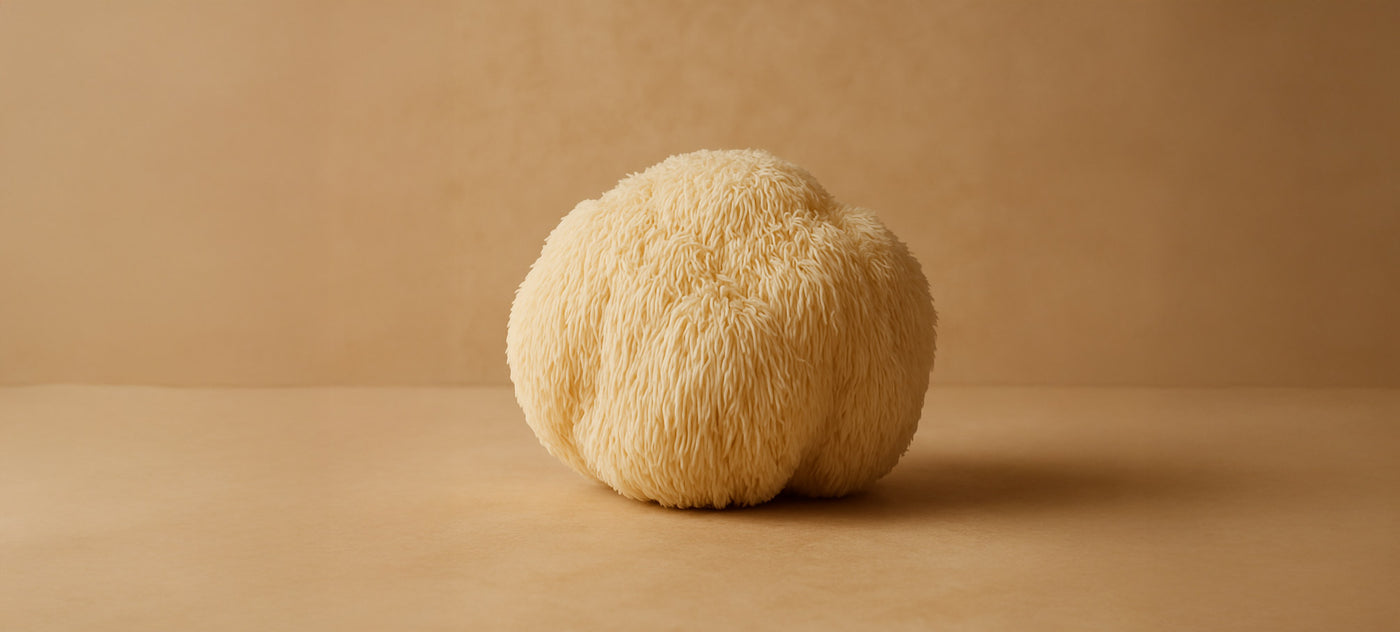
Hericium erinaceus usually has a rounded fruiting body with spines that all grow from the same point and hang down in a cascade, like a mop head. It is white or pale yellowish-brown, darkening with age, and the fruiting body is attached to the substrate by a very short, wide stipe. The fruiting bodies are annual, but they can reappear in the same place on a tree for several years. The whole fruiting body can be up to 30 cm in diameter, although 15 to 20 cm is more typical. The spines of Hericium erinaceus have pointed tips and are 1 to 5 cm long.
Reishi (Ganoderma lucidum) is available in different formats, including mushroom powder and extracts.
Reishi (Ganoderma lucidum) is available in different formats, including mushroom powder and extracts.
Please refer to each product page and label for its ingredients, format and directions for use.
R&D and Hericium studies
R&D and Hericium studies
- Hifas da Terra is developing new Lion's Mane-based ingredients within the Nutrigen 4.0 project, which aims to achieve automated, continuous production through state-of-the-art bioreactor cultivation.
- A study published by Hifas da Terra and carried out by our R&D department successfully fractionated H. erinaceus extract using eco-friendly solvents.
- Hifas da Terra's extensive mycological collection (Hifas Mycological Bank) holds its own strains isolated from the Iberian Peninsula.
Curiosities
Curiosities
- Hericium, the genus name, means ‘belonging to a hedgehog’, a reference to the spiny fertile surfaces of the mushrooms of this genus. As is often the case with the type species of a genus, the specific epithet erinaceus means the same as the genus name: like a hedgehog.